 Seba.Health
Key Takeaways
- Keltner synthesizes a decade of empirical findings to argue that awe is not merely a pleasant emotion but a pathway to physical health — reducing inflammatory cytokines, activating the vagus nerve, and improving cardiovascular markers through mechanisms that are partially independent of other positive emotions.
- The paper proposes a biopsychosocial model of awe's health effects: awe reduces self-focused rumination (psychological), increases vagal tone and reduces sympathetic arousal (biological), and enhances social connectedness and collective identity (social) — a triple mechanism that no other single emotion has been shown to activate simultaneously.
- Keltner's framing of awe as health-promoting represents the empirical culmination of a trajectory that began with Otto's numinous and passed through Maslow's peak experiences: the encounter with the vast is not merely meaningful but physiologically regenerative.
Awe as Medicine
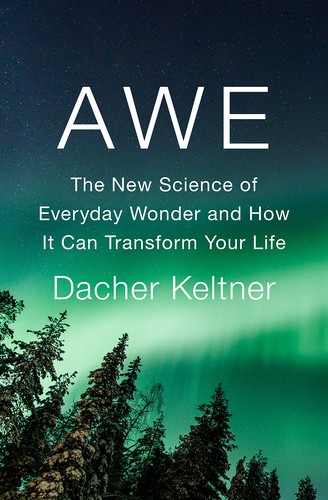
Keltner’s 2023 paper is a synthetic statement — the distillation of two decades of awe research into a formal argument that awe functions as a pathway to physical health. The claim is not metaphorical. Drawing on empirical studies of inflammatory markers, vagal tone, cardiovascular function, and immune response, Keltner argues that the experience of awe produces measurable physiological benefits that operate through at least three distinct mechanisms: the reduction of self-focused rumination (which interrupts the stress-inflammation cycle), the activation of the vagus nerve (which shifts autonomic balance from sympathetic mobilization toward parasympathetic restoration), and the enhancement of social connectedness (which activates the health-protective effects of belonging). No other positive emotion has been shown to engage all three pathways simultaneously.
The Vagus Nerve and the Numinous
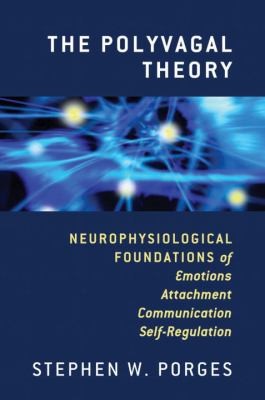
The vagal activation component deserves particular attention from the depth psychological tradition. Stephen Porges’s polyvagal theory identifies the vagus nerve — specifically the myelinated ventral vagal complex — as the neural substrate of social engagement, safety signaling, and the physiological state that permits rest, digestion, and repair. Keltner’s finding that awe activates this system suggests that the encounter with vastness registers in the body not as a threat to be survived but as a form of safety — a paradoxical safety that emerges precisely when the ego acknowledges its own smallness. This is the physiological correlate of what the spiritual traditions have always described: the soul that surrenders before the infinite is not diminished but restored. The vagus nerve, it appears, knows what the ego resists.
The Triple Mechanism: Body, Psyche, Community
Keltner’s biopsychosocial model maps remarkably well onto the tripartite structure of depth psychological health. The biological dimension — vagal activation and inflammation reduction — corresponds to what somatic psychology calls regulation: the body’s capacity to oscillate between mobilization and rest without becoming stuck in either state. The psychological dimension — reduced self-focus and rumination — corresponds to what Jungian psychology calls ego-relativization: the loosening of the ego’s compulsive self-referencing in the presence of something that exceeds it. The social dimension — increased connectedness and collective identity — corresponds to what Hillman called the soul’s need for world: the recognition that the individual psyche is not self-contained but embedded in and sustained by relationships, culture, and the more-than-human environment. Keltner unifies these three dimensions under a single emotional trigger. Awe, in his model, is the emotion that simultaneously heals the body, quiets the ego, and returns the individual to the world.
The Depth Psychological Challenge
The paper’s limitation, from a depth perspective, is its uniformly positive account of the awe-health relationship. Keltner acknowledges the existence of “threat-based awe” — encounters with vastness that produce fear rather than wonder — but frames these as the exception rather than the rule. The depth tradition knows that the numinous encounter is fundamentally ambivalent: it heals and it destroys, it opens and it overwhelms, it produces both illumination and psychosis depending on the ego’s capacity to contain what it has encountered. The vagus nerve may respond to awe with activation, but the full psyche responds with something more complex — a reorganization that is not always experienced as health, not always welcomed, and not always survivable in its initial impact. Keltner’s health model captures awe’s restorative function; the depth tradition insists on also honoring its shattering one.
Sources Cited
- Keltner, D. (2023). Awe: A pathway to health. In D. Gruber & J. Dickerson (Eds.), Awe and Algorithms. Imprint Academic.
- Stellar, J. E., et al. (2015). Positive affect and markers of inflammation. Emotion, 15(2), 129–133.
- Gordon, A. M., et al. (2017). The dark side of the sublime: Distinguishing a threat-based variant of awe. Journal of Personality and Social Psychology, 113(2), 310–328.