 Seba.Health
Key Takeaways
- Edinger demonstrates that Jung's late letters constitute not a personal correspondence but a systematic epistemological treatise—a Kantian revolution applied to theology, where the God-image shifts from metaphysical object to psychic phenomenon without losing its ontological weight.
- The book's tripartite structure (epistemological premises → paradoxical God → continuing incarnation) mirrors the individuation process itself: one must first perceive the psyche's reality, then endure the tension of opposites within the God-image, and finally participate consciously in the incarnation that the archetype demands.
- Edinger's reading of the God-image as the "collective Self" undergoing biological evolution—not merely cultural change—places Jung's theology closer to Teilhard de Chardin's noosphere than to any confessional tradition, making depth psychology the heir to both natural science and prophetic religion.
Jung’s Letters Are Not Correspondence but Scripture for a Post-Theological Age
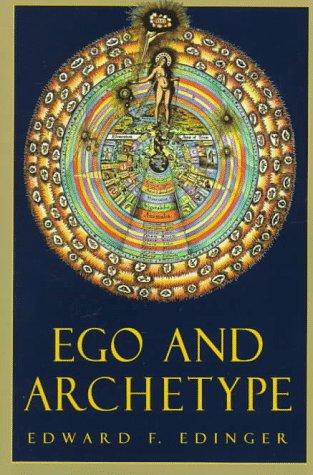
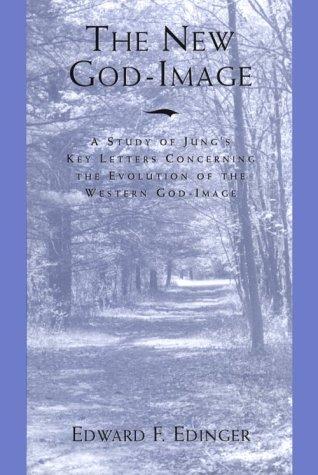
Edinger opens this book with an act of framing so decisive it constitutes an interpretive claim: the fourteen letters Jung wrote between 1951 and 1961 are not supplementary to the Collected Works but are, in certain respects, clearer and more radical than the formal publications. Where Answer to Job provoked scandal through its mythological exegesis, these letters spell out the epistemological and psychological machinery behind that exegesis with a directness Jung rarely permitted himself in print. Edinger treats them as a canon—selecting, sequencing, and segmenting them into three “parts” (Epistemological Premises, The Paradoxical God, Continuing Incarnation) that function less as scholarly categories than as initiatory stages. The reader must first master the Kantian threshold—the recognition that every perception, including the perception of God, is mediated by psychic structure—before the paradoxical nature of the new God-image can be tolerated, and before the ethical demand of continuing incarnation can even be understood. This is not editorial convenience; it recapitulates the structure Edinger laid out in Ego and Archetype (1972), where the ego-Self axis develops through progressive disillusionments. Here the disillusionment is collective: Western civilization must lose its naïve metaphysical God before it can encounter the God-image as a living psychic reality. Jung’s letter to Bernard Lang is the hinge: “On that threshold minds go their separate ways: those that have understood Kant, and the others that cannot follow him.” Edinger takes this as the foundational diagnostic for the entire modern spiritual crisis.
The God-Image Evolves Biologically, Not Just Culturally—and This Changes Everything
The most audacious claim Edinger extracts from Jung’s letters is that the God-image undergoes Entwicklung—evolution in the biological sense, not merely historical development. Edinger is precise about the mistranslation in Hull’s rendering of Answer to Job’s opening sentence: Entwicklungswege means “evolutionary pathway,” not “historical development.” This is not pedantry. It means the God-image has a substrate in the species, that it is as much a product of biological evolution as the human cortex itself. Edinger charts six stages—animism, matriarchy, hierarchical polytheism, tribal monotheism, universal monotheism, and the discovery of the psyche through individuation—and insists these are simultaneously historical epochs and layers of the collective unconscious present in every individual. The embryological analogy is explicit: ontogeny recapitulates phylogeny. Just as the human embryo passes through gill-slit stages, the developing psyche passes through animistic and polytheistic stages on its way toward the integration of opposites that individuation demands. This positions Jung’s project not as theological speculation but as a kind of depth-biological cartography. It also connects directly to Erich Neumann’s The Origins and History of Consciousness (1949), which traces the mythological stages of ego development through the same evolutionary logic. But where Neumann mapped the ego’s emergence from the unconscious, Edinger maps the God-image’s own self-transformation—the archetype’s development, not just the ego’s awareness of it.
The Paradoxical God Demands Ethical Consciousness, Not Worship
Central to the book’s second movement is Jung’s insistence—spelled out most forcefully in the letters to Father Victor White and to David Cox—that the God-image is a complexio oppositorum, a union of good and evil, light and dark, masculine and feminine. The traditional Christian identification of God with the Summum Bonum is, in Jungian terms, a catastrophic amputation. It strips the Deity of its shadow, exiles the feminine, and produces the dissociated condition of modern Western consciousness: a world that has science but no meaning, technology but no soul. Edinger shows that Jung’s quarrel with White was not academic but existential: White could not accept the dark side of God without destroying his faith, and the correspondence eventually broke down. The psychological reading is devastating—White’s inability to integrate the shadow of the God-image mirrors the collective Western failure that produced both atheism and totalitarianism. Edinger draws the parallel to Answer to Job explicitly: Yahweh’s unconsciousness, his failure to consult his own omniscience, is the theological expression of a psychic fact. God, as Jung understands the term, is an autonomous psychic entity that does not yet fully know itself and requires human consciousness for its self-realization. This is not hubris but vocation. As Edinger puts it elsewhere in Transformation of the God-Image (1992), the righteous person becomes the vessel into which God enters in order to achieve self-reflection. The ethical implication is staggering: human suffering is not punishment for sin but the cost of the Deity’s self-becoming.
Continuing Incarnation Is Not Metaphor but Psychological Obligation
The book’s final movement addresses what Edinger calls the “continuing incarnation”—the idea that the incarnation of God in Christ was not a unique historical event but an ongoing psychic process that now falls to individual men and women. Jung’s letter to Erich Neumann is pivotal: God generates the creature by projecting His own Self-image onto humanity, then unconsciously expects humanity to carry the future and the supreme value. This is identical to the dynamic of projection in human parenting, and Edinger does not flinch from the implication: just as conscious parents must withdraw their projections from their children, so conscious individuals must recognize that they carry the divine projection and take responsibility for it. This is the coniunctio—the union of opposites within the individual psyche—and Edinger insists that if enough individuals achieve it, they become “seeds sown in the collective psyche which can promote the unification of the collective psyche as a whole.” The question of how many is left characteristically open: “I think each individual ought to live his life out of the hypothesis that maybe one would do.” This connects powerfully to Murray Stein’s work on midlife transformation and to James Hollis’s insistence in The Middle Passage that the second half of life demands a reckoning with the Self that no collective institution can mediate.
For anyone navigating the wreckage of institutional religion or the spiritual vacancy of secular materialism, this book provides what no other single volume does: a systematic account of how the Western God-image arrived at its present crisis, what that crisis means psychologically, and what it demands of the individual who perceives it. Edinger does not offer comfort. He offers a vocation.
Sources Cited
- Edinger, E.F. (1996). The New God-Image: A Study of Jung's Key Letters Concerning the Evolution of the Western God-Image. Chiron Publications. ISBN 978-0-933029-98-9.
- Jung, C.G. (1952). Answer to Job. Collected Works, Vol. 11. Princeton University Press.
- Jung, C.G. (1973). Letters, Vol. 1: 1906–1950. Ed. G. Adler & A. Jaffé. Princeton University Press.