 Seba.Health
Key Takeaways
- Edinger positions depth psychology not as a therapeutic technique but as a civilizational event of Copernican magnitude — the moment the psyche became an object to itself — and these five essays are his final articulation of why that event demands a new relationship between ego and transpersonal reality.
- The book's central argument is that the collapse of religious containment is not a catastrophe but a precondition: only when the God-image falls out of metaphysical projection and into the psyche can an empirical science of the soul begin, making individuation the successor to institutional religion rather than its competitor.
- Edinger's treatment of the transference phenomenon as an expression of centroversion — the Self's gravitational pull toward wholeness — reframes the analytic relationship as a sacred container that replaces, at the individual level, the collective containment once provided by living myth.
Depth Psychology as the Second Creation: Edinger’s Claim That Consciousness Is a Cosmogonic Act
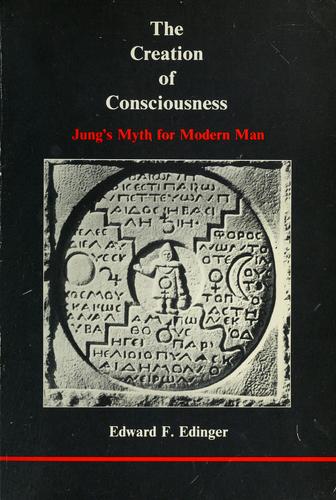
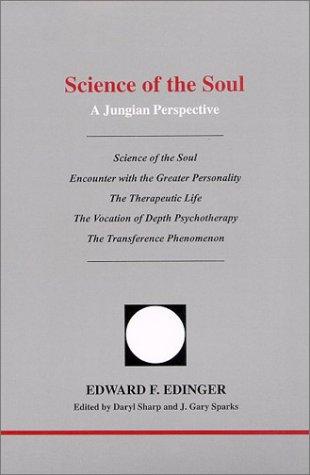
Edinger opens Science of the Soul with a provocation that most readers absorb without grasping its full weight: the discovery of the unconscious is “at least as significant as, and equal in magnitude to, the discovery of nuclear physics.” This is not rhetorical inflation. He means it structurally. Just as nuclear physics revealed that matter is not what it appears to be — that the solid world dissolves into fields and probabilities — so the discovery of the unconscious revealed that the ego is not the sole tenant of its own house. The fish-in-water analogy he borrows from Zen is precise: human beings have always lived inside the psyche, but until Freud and Jung, they could not make it an object of empirical study. Edinger calls this a “Copernican revolution” that has “as yet hardly penetrated collective awareness.” What distinguishes this claim from boosterism is his genealogical argument. In The Creation of Consciousness (1984), Edinger had already articulated the thesis that consciousness is not merely a feature of human beings but the purpose of human existence — that “the individual psyche is the Holy Grail, made holy by what it contains.” In Science of the Soul, he completes the arc: if consciousness is cosmogonic, then its empirical study is not a branch of medicine or philosophy but a new dispensation, a successor to both religion and science. Jung’s late statement — “the sole purpose of human existence is to kindle a light in the darkness of mere being” — is not, for Edinger, a metaphor. It is a diagnostic criterion for what counts as a meaningful life.
The Collapse of Containment Is the Birth Condition of the Individual Soul
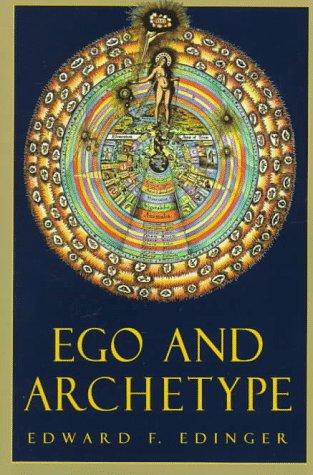
The most structurally important argument in the book is Edinger’s account of what happened when “God fell out of heaven into the psyche” around the fifteenth century. The withdrawal of collective projections into metaphysical religious dogma unleashed what he calls “a collective inflation, a vast increase of ego energy” — the Renaissance, the Enlightenment, the explosion of science and exploration. But this expansion was purchased at a specific price: “a progressive loss of connection to the transpersonal dimension.” Edinger does not moralize about this loss. He treats it as a necessary developmental stage, analogous to the ego-Self separation he mapped in Ego and Archetype (1972), where the first half of life requires differentiation from the Self and the second half demands reunion. The collective parallel is exact: Western civilization has undergone its own ego-Self separation, and depth psychology is the instrument of its potential reunion. This is where Edinger parts company with both nostalgic traditionalists and secular triumphalists. He insists that “there is no depth psychology for those who are contained within a specific religious creed because there’s no need for it.” Containment — the unconscious psychic identification with a dogmatic structure — is not relatedness. Relatedness requires what he calls “a community of knowers,” individuals who carry living experience of the Self rather than inherited belief. This distinction between containment and relatedness is one of the most clinically useful formulations in the Jungian literature, and it receives its clearest statement here.
The Encounter with the Greater Personality as the Axial Event of Individuation
The second essay, “Encounter with the Greater Personality,” presents four paradigmatic encounters — Jacob with the Angel, Arjuna with Krishna, Paul with Christ, Nietzsche with Zarathustra — as variations on a single archetypal pattern: the ego’s confrontation with the Self. Edinger’s method is amplificatory in the manner of von Franz, but his emphasis is diagnostic. He is interested in what determines whether such an encounter integrates or destroys. Jacob wrestles and is wounded but receives a new name; Paul is blinded and reborn; Nietzsche is shattered. The variable is ego strength — the capacity to sustain the tension of the numinous without identifying with it. This is where Edinger’s work directly challenges Hillman’s archetypal psychology. Where Hillman in Re-Visioning Psychology dissolves the ego into a multiplicity of imaginal perspectives, Edinger insists that the ego is the indispensable carrier of consciousness, the vessel without which the archetypal encounter produces psychosis rather than individuation. The Self “can generate psychoses,” Edinger writes plainly. The ego is not the enemy of soul; it is the organ by which soul becomes conscious. This is not conservatism — it is a clinical observation with stakes.
Transference as the Alchemical Vessel of Modernity
The final essays on therapeutic vocation and transference bring the book’s cosmological claims down to the scale of the consulting room. Edinger treats transference not as a clinical artifact to be resolved but as an expression of what Neumann called centroversion — the Self’s drive toward integration through relationship. The analyst becomes, temporarily, the carrier of the God-image that once resided in institutional religion. This is why Edinger calls depth psychotherapy a “vocation” in the full etymological sense: a calling, not a career. The therapeutic relationship inherits the function of the religious container, but at the individual rather than collective level. This gives the analyst’s work a transpersonal dimension that purely medical or cognitive models cannot accommodate. Edinger’s treatment here resonates with Jung’s own alchemical model in The Psychology of the Transference, where the analytic dyad mirrors the coniunctio of opposites. But Edinger is more explicit about the historical necessity: because collective containment has failed, the burden falls on the individual encounter.
Science of the Soul matters today not as an introduction to Jung — there are gentler ones — but as the most compressed statement of what is at stake if Jung’s discovery is taken seriously. Edinger is the only major Jungian commentator who consistently treats depth psychology as an event in the history of consciousness rather than a school of psychotherapy. For readers who have absorbed Jung’s ideas as concepts, this book insists they are instead obligations — that the creation of consciousness is not optional but is, as Edinger frames it, the very reason human existence exists at all.
Sources Cited
- Edinger, E.F. (2002). Science of the Soul: A Jungian Perspective. Edited by Daryl Sharp and J. Gary Sparks. Inner City Books.
- Edinger, E.F. (1972). Ego and Archetype. Penguin Books.
- Jung, C.G. (1953). Two Essays on Analytical Psychology. Collected Works, Vol. 7. Princeton University Press.