 Seba.Health
Key Takeaways
- Guggenbuhl-Craig's central move is not to critique bad practitioners but to reveal that the very structure of helping — the split into healer and patient — is an archetypal dissociation that destroys the healing it claims to perform.
- The book reframes the wounded healer not as a biographical credential ("I've suffered too") but as an intrapsychic polarity that must remain alive within the helper; when the wound is projected entirely onto the patient, the helper becomes a power-wielder wearing the mask of compassion.
- By locating the shadow of the helping professions in their institutional architecture rather than in individual moral failure, Guggenbuhl-Craig anticipates and grounds Hillman's later critique of the clinician as secular savior, making this slim volume the structural foundation for archetypal psychology's entire critique of therapeutic practice.
The Healer Who Splits Off the Wound Becomes the Tyrant
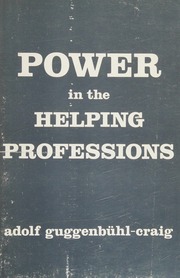
Adolf Guggenbuhl-Craig’s Power in the Helping Professions performs a single, devastating diagnostic act: it identifies the archetypal dissociation at the heart of every helping relationship and traces its consequences through medicine, education, social work, the clergy, and analysis. The book’s thesis is deceptively simple. Every helping profession constellates the archetype of the wounded healer — a figure in which woundedness and healing capacity are united. When the helper identifies exclusively with the healing pole and projects the wounded pole entirely onto the patient, student, or client, the archetype splits. What fills the vacuum left by the expelled wound is power. Jung’s dictum — “Where love is absent, power occupies the vacancy” — is the book’s operational axiom, quoted by Marie-Louise von Franz in her own work on the analytic relationship as a direct acknowledgment of Guggenbuhl-Craig’s contribution. The helper who has ceased to feel his own vulnerability does not become merely ineffective; he becomes dangerous, because the structural position of helping grants him archetypal authority that now operates without its intrinsic check. The doctor who cannot access his own patienthood, the teacher who has severed contact with his own ignorance, the social worker who has disowned his own antisocial impulses — each becomes an instrument of domination disguised as care.
Power Is Not a Personal Failing but an Archetypal Inevitability of the Helping Structure
What makes Guggenbuhl-Craig’s analysis fundamentally different from standard ethical critiques of professional misconduct is its refusal to locate the problem in individual character. Power does not enter the helping relationship because a particular analyst is narcissistic or a particular priest is corrupt. It enters because the structure itself — the asymmetry between one who helps and one who is helped — constellates archetypal polarization. This is a strictly Jungian move: the archetype is prior to the individual, and the individual enacts its pattern whether or not he intends to. As Andrew Samuels summarizes the theory, the wounded healer is “an archetypal image and, therefore” its dynamics are constitutive of the analytic encounter, not incidental to it. Patricia Berry references Guggenbuhl-Craig in her essay on the shadow of training precisely because the institutional apparatus of training programs — with their standardization, hierarchies, and credentialing procedures — reproduces the very split the book diagnoses. Uniformity of training produces helpers who have been processed through a system that reinforces identification with the healer pole, manufacturing professionals whose structural position immunizes them against the wound they are meant to tend.
The Wounded Healer Archetype Is Not a Metaphor for Empathy but a Demand for Intrapsychic Tension
Guggenbuhl-Craig’s wounded healer is frequently domesticated in popular therapeutic culture into a bland recommendation for empathy: the therapist should “know suffering” so she can “relate to” her patient. This entirely misses the book’s point. The wound is not a past experience to be recalled; it is an active intrapsychic reality that must remain constellated in the helper during the act of helping. When Meier drew parallels between the Asclepian healing temples and modern analysis, he demonstrated historical continuity but did not specify the mechanism of what goes wrong. Guggenbuhl-Craig provides the mechanism: the archetype splits when the helper’s ego seizes the healing pole and evacuates the wound. The result is not merely insufficient empathy but a covert reversal in which the helper’s unconscious wound — now disowned — acts out through the very helping behavior. Von Franz’s account of Jung’s intervention in her first analysis of a borderline patient illustrates the phenomenon exactly: her desperate urge to prevent a psychotic episode was itself the power shadow, the healer pole inflated to the point where it overrode the patient’s own psychic destiny. Jung’s question — “What makes you so sure?” — is the quintessential Guggenbuhl-Craig intervention, puncturing the inflation by reactivating the analyst’s wound of not-knowing.
Hillman’s Secular Soteriology Critique Rests on Guggenbuhl-Craig’s Foundation
James Hillman explicitly identifies Guggenbuhl-Craig’s 1971 work as the basis for understanding how the restriction of “clinical” to human interior subjectivity promotes “the grandeur of the clinician to an archetypal significance of savior.” Hillman’s critique of therapy as secular soteriology — a redemptive apparatus that increases the patient’s self-centered misery while inflating the clinician — is architecturally dependent on Guggenbuhl-Craig’s prior demonstration that the healer-patient split generates archetypal empowerment in the clinician. In Healing Fiction, Hillman places Guggenbuhl-Craig alongside Giegerich, Watkins, and Ziegler as one of several Jungian thinkers developing what Hillman calls an Adlerian critique of psychotherapy: the analysis of how power, superiority, and the flight from inferiority corrupt therapeutic theory itself. Guggenbuhl-Craig’s distinctive contribution to this group is his focus on the relational structure rather than on concepts or methods. Where Giegerich diagnoses the neurosis of psychological theory and Watkins exposes the ego-domination built into active imagination techniques, Guggenbuhl-Craig diagnoses the relational architecture — the dyad itself — as the primary site of corruption. This makes his work the necessary structural complement to the others’ epistemological critiques.
For anyone encountering depth psychology today — whether as practitioner, patient, or student — Power in the Helping Professions provides something no other book in the tradition does: a systematic archetypal anatomy of why helping goes wrong that locates the pathology not in bad people, inadequate training, or flawed theories but in the very act of positioning oneself as helper. It is the book that makes every subsequent discussion of countertransference, therapeutic ethics, and clinical humility accountable to an archetypal logic rather than merely a moral one. Its brevity is part of its power. In fewer than 150 pages, Guggenbuhl-Craig makes it impossible to practice any helping profession innocently — which is to say, unconsciously.
Sources Cited
- Guggenbuhl-Craig, A. (1971). Power in the Helping Professions. Spring Publications. ISBN 978-0-88214-322-3.
- Jung, C.G. (1946). The Psychology of the Transference. In Collected Works, Vol. 16. Princeton University Press.
- Hillman, J. (1972). The Myth of Analysis: Three Essays in Archetypal Psychology. Northwestern University Press.