 Seba.Health
Key Takeaways
- Hillman's *Mythic Figures* demonstrates that mythology is not a symbolic supplement to psychology but its operational substrate — the gods do not illustrate complexes, they *are* the structural grammar through which psychic life becomes intelligible at all.
- The book's most radical move is its insistence that Freud's "errors" about Oedipus were not failures of scholarship but acts of homeopathic psychologizing — madness in the method reaching toward the madness in the case — thereby reclaiming psychoanalysis as a myth-preserving cult rather than a science.
- By reading Zeus not as sovereign authority but as the ordering power of differentiated imagination — polytheism as antidote to titanic enormity — Hillman provides a political theology of the psyche that directly challenges both Jungian introverted retreat and monotheistic ego psychology.
Mythology Is Not Applied to Psychology — It Is Psychology’s Native Language
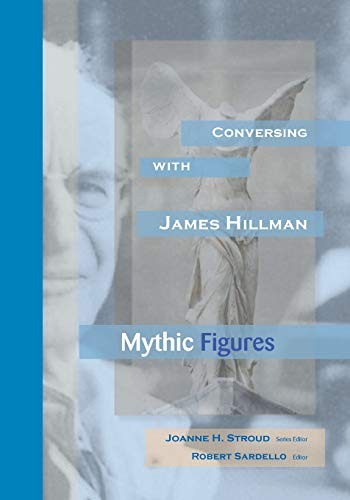
James Hillman’s Mythic Figures (2007) assembles eighteen essays spanning decades of engagement with specific Greek divinities — Dionysus, Athene, Aphrodite, Hestia, Hera, Hermes, Apollo, Ares, and others — not as academic exercises in classical reception but as demonstrations of a single, unrelenting thesis: depth psychology and mythology are the same discourse in different costumes. “They the Greeks had no depth psychology and psychopathology such as we have. They had myths. And we have no myths as such — instead, depth psychology and psychopathology.” This is not analogy. Hillman means it ontologically. The psyche does not use myths; it is mythic, and every clinical phenomenon — pornographic obsession (Aphrodite), strategic calculation (Athene), intoxicated inflation (Hermes), domestic containment (Hestia) — names a god’s mode of operation in the soul. Where Jung’s Collected Works treat archetypes as structural patterns within a layered psyche, Hillman dissolves the container model entirely. The archetype is not in the unconscious; it is the way consciousness takes form. This is the move that separates archetypal psychology from analytical psychology, and Mythic Figures is where Hillman works it out god by god, with full mythographic detail that Re-Visioning Psychology necessarily compresses into polemic. In The Myth of Analysis, Hillman had already argued that “myths are universali fantastici” following Vico, and that fantasy is “the primordial force of the soul.” Mythic Figures is the encyclopedic fulfillment of that claim — each chapter a sustained act of what he calls “clinical mythology.”
Freud’s Oedipus Was Not a Mistake but an Epistrophé — and This Changes Everything About How We Read Psychoanalysis
The essay “Oedipus Revisited” contains one of Hillman’s most consequential reframings. Rather than joining the chorus that Freud misread Sophocles, Hillman argues that Freud performed an epistrophé — a turning back of family life into its mythic ground. “While Oedipus collapses into Hans down the street, there glimmers through little Hans the radiance of Oedipus, Sophocles, Greece, and the gods.” The genius of psychoanalysis is not its scientific accuracy but its mythologizing power: it re-enchants the bourgeois family by casting parents as cosmic figures. “What holds us to Freud … is not the science in the theory but the myth in the science.” This reading rescues Freud from both his positivist defenders and his postmodern critics. It also positions psychoanalysis as an unwitting cult of Oedipus — a ritual practice that endlessly re-enacts one mytheme. The implication is devastating for literalist clinical practice: if the Oedipal configuration holds power not because of childhood events but because we are “mythical beings,” then the entire edifice of developmental causality becomes secondary to the archetypal drama it unknowingly serves. Edward Edinger’s work on ego-Self axis dynamics in Ego and Archetype operates within precisely the developmental framework Hillman here dissolves. Where Edinger charts a progressive individuation through sequential encounters with the Self, Hillman insists that we are always already inside multiple myths simultaneously — “mythical living” rather than living one’s myth.
Zeus as Polytheistic Imagination: The Political Theology Hidden in the Titan Essays
The essays on Zeus and the Titans constitute the book’s most overtly political material, and its most underappreciated. Hillman reads twentieth-century enormities — totalitarianism, technological gigantism, consumerist distraction — as expressions of titanic consciousness: unimaged, unlimited, invisible force operating without differentiation. The Titans tear Dionysus apart with toys and mirrors, just as contemporary culture atomizes the life-force through trivial distraction. The antidote is not repressive discipline — “the cure of enormity through more discipline is but an allopathic measure” — but Zeus understood as the ordering power of differentiated imagination. Zeus’s dozen matings produce Apollo, Hermes, Dionysus, Athene — each a distinct mode of consciousness. His supremacy is not monarchical authority but imaginative range: “His range of fantasy was comprehensive, large, generous, and differentiated.” This is polytheism as psychological method, and it directly counters what Hillman calls “monotheism’s professional minions of its secularism and scientism” — the ego psychologists, the evidence-based practitioners, the diagnostic manuals that reduce the diseases of the gods to behavioral categories. López-Pedraza’s work on Hermes and His Children operates in the same mythographic territory, but Hillman pushes further by linking the failure of imagination to political catastrophe. The retreat into private interiority that Jungians practiced — “put yourself in order and the world follows” — is itself a form of titanic invisibility, hiding from the anima mundi. Hillman reverses Jung’s dictum: “on the destiny of the world, the fate of the individual depends.”
Why the Gods’ Homelessness Is the Central Diagnostic of Our Time
The thread connecting every essay in Mythic Figures is the displacement and distortion of divine images in secular modernity. Hermes, “deprived of his depth and his divinity, became secularized, merely slippery, deceiving, seductive, commercial.” Aphrodite, stripped of her cosmological dignity, manifests as pornographic compulsion. Ares, unrecognized, drives policy through paranoid bellicosity. The gods have not fled; they have been forced into “the last place available: the human mind,” where, as Zimmer said, “all the gods are within,” and as Jung continued, “the gods have become diseases.” This formulation — divine powers degraded into pathologies because culture offers no adequate image-receptacles — is the beating heart of archetypal psychology. It is also what distinguishes Hillman from Joseph Campbell, whom he eulogizes and critiques in the final essay. Campbell recovered the hero myth; Hillman insists that the heroic function belongs not to the hero figure but to myth itself. “Not myth of the hero, but myth as the hero.” This is the book’s culminating insight and its challenge to anyone practicing depth psychology today: the therapeutic task is not to help patients find their personal myth, nor to map their developmental stage, but to restore the mythic imagination as a mode of perception that gives events their psychological depth. No other text in the Hillman corpus performs this operation across so many divine figures with such sustained philological and psychological detail. Mythic Figures is the atlas of archetypal psychology — not a theory but a practice of seeing, chapter by chapter, which god is present and what that presence demands.
Sources Cited
- Hillman, J. (2007). Mythic Figures. Uniform Edition, Vol. 6. Spring Publications.
- Hillman, J. (1972). The Myth of Analysis. Northwestern University Press.
- Kerényi, K. (1976). Dionysos: Archetypal Image of Indestructible Life. Princeton University Press.