 Seba.Health
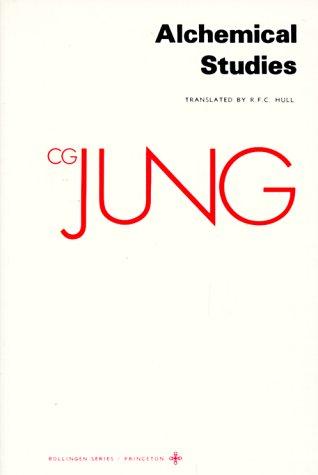
Key Takeaways
- Alchemical Studies functions not as a primer on alchemy but as Jung's laboratory notebook for the method of reading projection — demonstrating how to decode the psyche's tendency to discover itself in matter before it can recognize itself as psyche.
- The volume's five essays collectively establish Mercurius as the governing archetype of the unconscious itself: not a fixed symbol but a shape-shifting phenomenology of psychic autonomy that resists every rational domestication.
- Jung's portrait of Paracelsus is covert autobiography — a study of the psychic cost exacted when the "light of nature" (empirical intuition of the unconscious) collides with the "light of revelation" (collective dogma), a collision Jung recognized as the central drama of his own intellectual life.
Alchemy Is Not Metaphor: Projection as the Primary Epistemology of the Unconscious
Jung’s Alchemical Studies (Collected Works, Volume 13) occupies a peculiar structural position in his corpus. The Editorial Note makes this explicit: the essays gathered here are “preliminary studies for the weightier volumes” — Psychology and Alchemy, Aion, and Mysterium Coniunctionis — yet they are precisely the texts where Jung’s method is most visible and least armored by systematic ambition. What emerges across the five pieces is not a theory of alchemy but a sustained demonstration of how to read projection phenomenologically. Jung insists that projection “is never made; it happens, it is simply there.” The alchemist did not choose to see psychic contents in chemical matter; the unconscious enacted itself through matter because consciousness offered no adequate vessel. This is the book’s central epistemological claim, and it reverberates through every essay: the unconscious knows itself first through what it projects, and the history of that projection — in stars, in stones, in mercurial waters — constitutes the actual pre-history of depth psychology. When Jung writes in Psychology and Alchemy that “the alchemist projected what I have called the process of individuation into the phenomena of chemical change,” he is summarizing a thesis. In Alchemical Studies, he shows the thesis being born from specific texts: Zosimos’s visions, the Secret of the Golden Flower, Paracelsus’s De vita longa.
Mercurius Is the Phenomenology of the Autonomous Psyche
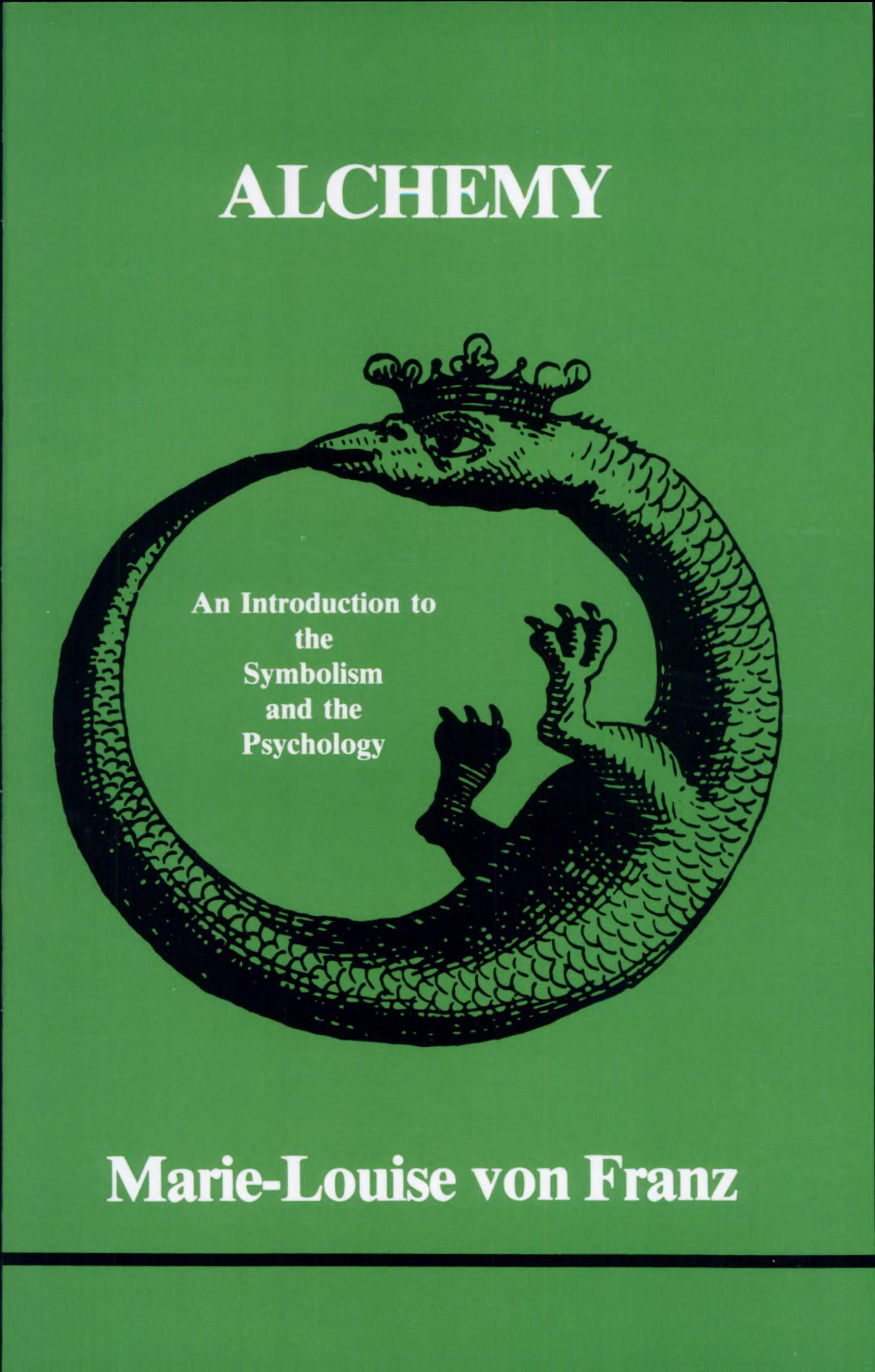
The essay “The Spirit Mercurius” is the volume’s gravitational center. Jung tracks Mercurius through an astonishing range of attributions — spirit and matter, poison and panacea, trickster and redeemer, masculine and feminine, beginning and end of the work — and refuses to resolve the contradictions. This refusal is the point. Mercurius is the alchemical name for what analytical psychology calls the autonomous complex or, at its highest register, the self in its pre-integrated form. The frontispiece illustration makes this visible: the spiritus mercurialis appears as a monstrous dragon constituting a quaternity in which “the fourth is at the same time the unity of the three.” This is not decorative symbolism; it is a diagram of the unconscious’s self-organizing logic, which operates by the coincidence of opposites rather than by Aristotelian exclusion. Readers familiar with Edinger’s Anatomy of the Psyche will recognize that Edinger’s systematic mapping of alchemical operations onto psychological processes is a pedagogical rationalization of what Jung presents here in its raw, unsettled form. The difference matters: Jung’s Mercurius retains the quality of the tremendum — the figure who “refuses to function as a component part of our rational consciousness.” To systematize Mercurius too quickly is to perform precisely the domestication the archetype resists.
The Light of Nature Against the Light of Revelation: Paracelsus as Jung’s Shadow Portrait
“Paracelsus as a Spiritual Phenomenon” stands apart in the volume’s architecture. Jung himself acknowledged that Paracelsus’s contradictory genius — physician, alchemist, mystic, brawler — held a mirror to his own predicament. The essay’s structural spine is the distinction between the lumen naturae (light of nature) and the lumen Dei (light of revelation). Paracelsus attempted to hold both, and the resulting tension produced what Jung calls an “unconscious conflict with the Christian beliefs of his age in a way that seems to us inextricably confused.” Yet Jung immediately reframes this confusion as prophetic: “in this confusion are to be found the beginnings of philosophical, psychological, and religious problems which are taking clearer shape in our own epoch.” This is the essay where Jung comes closest to articulating the theological hazard of depth psychology itself. He states elsewhere in the Collected Works that psychology “is very definitely not a theology; it is a natural science that seeks to describe experienceable psychic phenomena.” But Paracelsus shows what happens when the natural light discovers contents — the arcane substance, the Iliaster, the inner firmament of the soul — that theology claims exclusive jurisdiction over. The tension is never resolved in Paracelsus’s work, and Jung does not resolve it either. Readers of Answer to Job will recognize this as the same wound examined from a different angle: the ego confronting numinous material that exceeds every available container.
The Secret of the Golden Flower as the Hinge Between East and West
The “Commentary on The Secret of the Golden Flower” is the volume’s chronological origin point — the text that, as Jung recounts in Memories, Dreams, Reflections, first illuminated the nature of alchemy for him. What makes the commentary more than a historical curiosity is Jung’s argument that the Chinese text describes the same circumambulation of a psychic center that European alchemists pursued through projection into matter, but with a critical difference: the Taoist practitioner knows he is working on consciousness. The European alchemist does not. This asymmetry generates both the tragedy and the fertility of Western alchemy — tragedy because the operator never fully grasps what he is doing, fertility because the projected material accumulates over centuries into an unparalleled symbolic treasury of individuation imagery. Jung’s observation that “alchemy has performed for me the great and invaluable service of providing material in which my experience could find sufficient room” is not false modesty. No single clinical case, he insists in Mysterium Coniunctionis, is comprehensive enough to display the individuation process in full. The alchemical corpus compensates for the brevity of individual life.
For contemporary readers, Alchemical Studies offers something no other volume in the Collected Works provides: direct access to Jung’s interpretive practice at its most agile and least encumbered by systematic obligation. Where Psychology and Alchemy demonstrates the thesis through dream analysis and Mysterium Coniunctionis constructs the cathedral, this volume shows the craftsman selecting his stones, turning them in the light, testing their weight. It is the indispensable companion for anyone who wants not merely to know what Jung concluded about alchemy but to learn how he read — how he moved from an opaque symbol to a living psychological insight without collapsing the symbol’s autonomy in the process.
Sources Cited
- Jung, C.G. (1967). Alchemical Studies. Collected Works of C.G. Jung, Vol. 13. Princeton University Press.