 Seba.Health
Key Takeaways
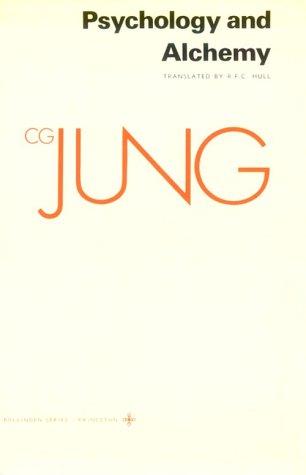
- Psychology and Alchemy does not use alchemy to illustrate Jungian psychology; it uses alchemy to prove that the individuation process is an objective, transpersonal phenomenon with a seventeen-century documentary trail independent of any single analyst's clinical bias.
- The dream series at the book's center functions not as case material but as an empirical control group: an analysand with no alchemical knowledge spontaneously produces the same symbolic sequences that adepts recorded across centuries, thereby establishing the collective unconscious as a falsifiable hypothesis rather than a speculative postulate.
- Jung's real polemic target is not Freud but the Enlightenment assumption that projection is error; Psychology and Alchemy reframes alchemical projection as the psyche's primary mode of self-disclosure, making the history of "failed" chemistry into a successful phenomenology of the unconscious.
Alchemy Is Not Jung’s Metaphor—It Is His Evidence
Jung is explicit in the prefatory note: the book exists to demonstrate that “the world of alchemical symbols definitely does not belong to the rubbish heap of the past, but stands in a very real and living relationship to our most recent discoveries concerning the psychology of the unconscious.” This is not an invitation to read alchemy poetically. It is a methodological claim. Jung treats the alchemical corpus the way a paleontologist treats the fossil record—as independent, datable evidence for structures that still operate in living organisms. The dream series he presents in Part II was recorded by Wolfgang Pauli, a physicist with no knowledge of alchemical literature, and the motifs that emerge—the rotundum, the quaternity, the coniunctio—map onto medieval and Hellenistic texts with a specificity that cannot be explained by cultural transmission. This is the book’s decisive move. Where Symbols of Transformation (1912) had compared mythological parallels impressionistically, Psychology and Alchemy introduces a quasi-experimental design: if an uninstructed modern dreamer produces the same symbolic sequences as a sixteenth-century adept, the common source cannot be personal memory. It must be structural. The collective unconscious ceases to be a philosophical postulate and becomes, as Jung insists, a hypothesis supported by convergent evidence from independent data sets. Edward Edinger later built his entire Anatomy of the Psyche on this foundation, translating Jung’s alchemical operations into clinical stages—but Edinger’s systematization works only because Jung first established the evidential framework here.
Projection Is Not Distortion but Disclosure
The chemist’s dismissal of alchemy rests on the premise that projecting psychic contents onto matter is a cognitive failure. Jung inverts this completely. In paragraph 253 he describes how “any prolonged preoccupation with an unknown object acts as an almost irresistible bait for the unconscious to project itself into the unknown nature of the object.” The alchemist staring into his retort is not hallucinating; he is engaged in what Jung, in later work, will call active imagination—only he does not know it. The vessel becomes a screen on which the opus of the unconscious displays itself. This reframing has enormous consequences. It means the entire history of alchemy is a phenomenological record of the individuation process produced under naturalistic conditions, without the interference of a therapist’s interpretive framework. Jung states in Mysterium Coniunctionis that “no single individual ever attains to the richness and scope of the alchemical symbolism” because the tradition accumulated over centuries what any one analysand can produce only in fragments. Alchemy thus serves depth psychology the way the geological column serves evolutionary biology: it provides temporal depth and cumulative pattern that no snapshot of a single life could yield. James Hillman would later challenge Jung’s emphasis on integration, but even Hillman’s Re-Visioning Psychology cannot escape the debt it owes to Jung’s rehabilitation of imaginal processes—processes that Psychology and Alchemy rescued from the category of pathology and restored to the category of knowledge.
The Lapis as Prefiguration of the Self Rewrites the History of Western Interiority
The third part of the book, “Religious Ideas in Alchemy,” makes the most audacious claim: that the alchemical lapis philosophorum is a parallel and in some respects a compensatory counterpart to the Christ figure. Christ represents spiritual perfection achieved through the exclusion of matter, shadow, and evil. The lapis represents wholeness achieved through the inclusion of the rejected—the in stercore invenitur, found in filth, the despised prima materia. Jung is not reducing Christ to a symbol or elevating alchemy to a religion. He is diagnosing a split in Western consciousness. Christianity produced a light-image of the self so radiant that its dark twin had to be carried underground, in the retorts and coded treatises of the adepts. As he writes in Memories, Dreams, Reflections, alchemy “formed the bridge on the one hand into the past, to Gnosticism, and on the other into the future, to the modern psychology of the unconscious.” This genealogy—Gnosticism to alchemy to depth psychology—is not intellectual decoration. It is Jung’s answer to the problem of authority. If individuation has no history, it is merely one therapist’s invention. If it has a seventeen-century history running through Zosimos, Paracelsus, and Goethe’s Faust, it is a transpersonal process that recurs wherever consciousness confronts the unconscious. The point resurfaces in Aion, where the Christ-lapis parallel becomes the axis for an entire psychology of the Western aeon.
Why the Vessel Must Not Be Opened
A structural insight runs through the book that is easy to miss: containment precedes transformation. The alchemists insisted on the vas hermeticum—the sealed vessel. Mercurius must not escape. As Jung notes in Alchemical Studies, the adepts “wanted to keep him in the bottle in order to transform him.” This is not quaint superstition; it is a precise psychological principle. The affect, the complex, the autonomous content must be held in consciousness—neither repressed nor acted out—if it is to undergo metamorphosis. This is the alchemical foundation for what Wilfred Bion would later call “containment” and what Donald Winnicott would describe as the holding environment, though neither acknowledged the debt. Psychology and Alchemy establishes that the therapeutic container is not a modern clinical invention but an archetypal structure recognized wherever human beings have attempted inner transformation.
For anyone entering depth psychology today, this book does something no other text accomplishes: it places the consulting room inside a history that stretches from Hellenistic Egypt to the present, demonstrating that what happens between analyst and analysand is not a technique invented in Vienna but a recurrence of the oldest known effort of the human psyche to know and transform itself. Without Psychology and Alchemy, analytical psychology would be a clinical method. With it, analytical psychology becomes a chapter in the natural history of the soul.
Sources Cited
- Jung, C.G. (1944). Psychology and Alchemy. Collected Works of C.G. Jung, Vol. 12. Princeton University Press.