 Seba.Health
Key Takeaways
- Jung and Kerényi's collaboration does not merge psychology and philology into a single method but instead stages a controlled confrontation between two irreducible modes of knowing—mythological immediacy and archetypal amplification—whose friction is itself the book's argument about how meaning arises from myth.
- The "Divine Child" is not a developmental stage but a structural paradox: the archetype that signifies both absolute vulnerability (abandonment) and absolute indestructibility (futurity), making it the psychic image through which consciousness perpetually re-originates itself from the unconscious.
- Kerényi's treatment of the Kore-Demeter mysteries insists that the Eleusinian experience cannot be decoded into a psychological formula, thereby setting a limit on Jungian interpretation that Jung himself does not fully contest—a methodological restraint that distinguishes this collaboration from the reductive myth-mining of Campbell's monomyth.
The Book Enacts What It Theorizes: Collaboration as Epistemological Method
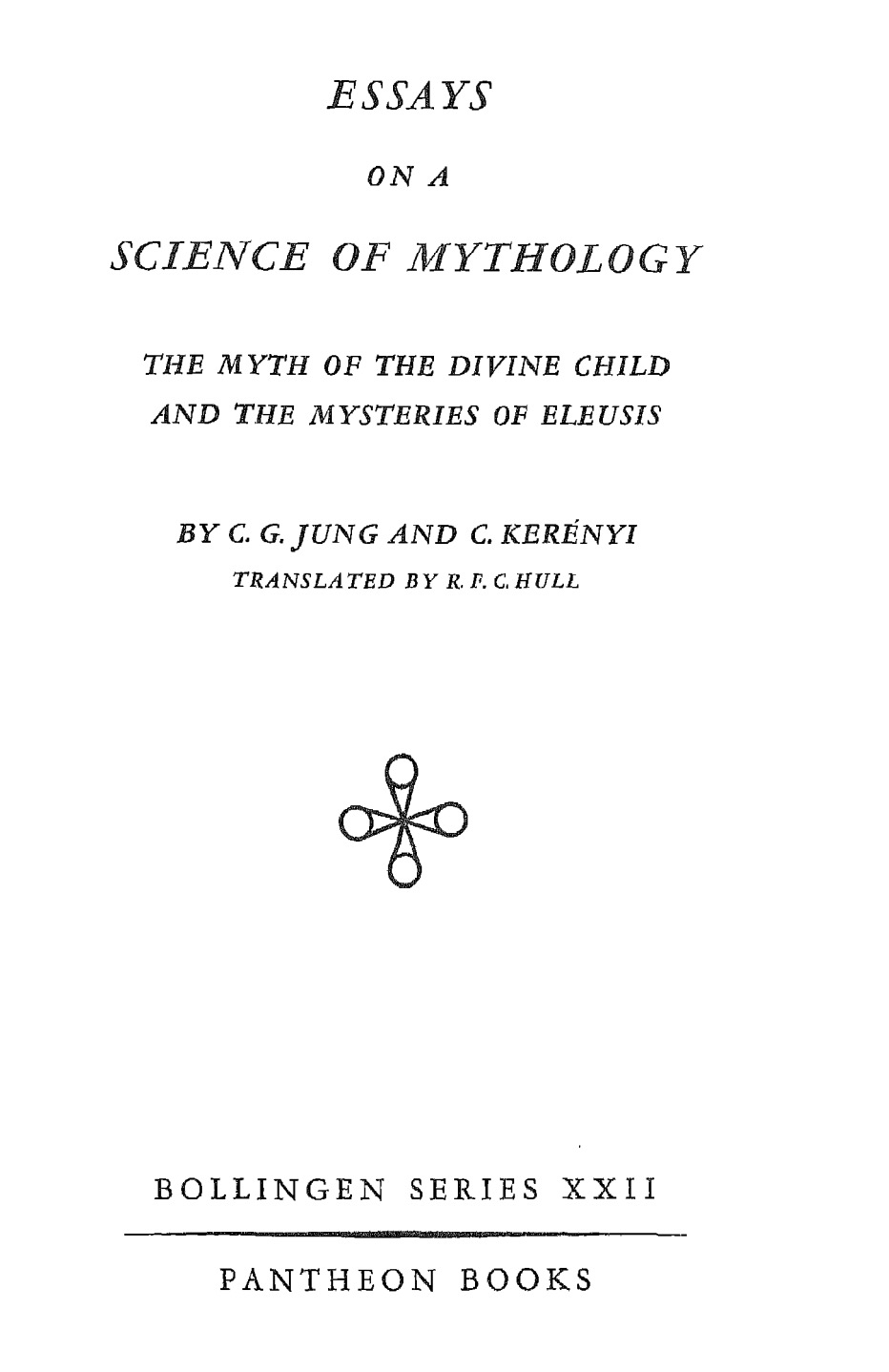
Most readers treat this volume as two experts dividing labor—Kerényi supplies the mythological material, Jung supplies the psychological interpretation. That reading is wrong. The architecture of the book is its thesis. Kerényi’s Prolegomena opens with an assertion that mythology must be tasted fresh, not explained: “The water must be fetched and drunk fresh from the spring if it is to flow through us and quicken our hidden mythological talents.” He explicitly warns that science has “blocked the road to mythology” with its interpretations and explanations. Jung then arrives not as the authorized interpreter but as a parallel voice offering a different mode of contact with the same images. The two essays on the Divine Child do not build on each other sequentially; they stand in tension. Kerényi insists the mythologem “speaks for itself, acts for itself, and is true of itself just like any other scientific” proposition, treating myth as autonomous cosmic utterance. Jung, by contrast, reads the child motif as an expression of the Self’s compensatory activity within the psyche. Neither author subsumes the other. The book’s structure—mythological essay followed by psychological essay, repeated twice—forces the reader into the gap between two legitimate but incommensurable hermeneutics. This is not interdisciplinary synthesis. It is a demonstration that the fullest encounter with archetypal imagery requires holding two frames simultaneously, the way binocular vision requires two distinct focal points to produce depth. No other book in the Bollingen tradition achieves this with such formal precision; Joseph Campbell’s The Hero with a Thousand Faces, published the same year, collapses that tension into a single monomythic template, sacrificing exactly the irreducibility Kerényi labored to preserve.
The Abandoned Child Is the Archetype of Consciousness Itself, Not a Motif of Pathos
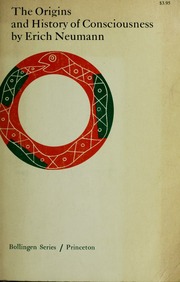
Jung’s essay on the child archetype contains one of his most compressed formulations of the relationship between ego and Self. The abandoned, orphaned, threatened child—common to Apollo, Hermes, Zeus, Dionysus, Moses, and countless hero myths—does not primarily signify victimhood or biographical trauma. It signifies the necessary condition under which new consciousness comes into being: separation from the matrix. Erich Neumann, in The Origins and History of Consciousness, builds directly on this point, noting that “in the child archetype the conscious ego is still incompletely separated from the unconscious self, and everywhere there are traces of its containment in the uroboros.” But Neumann also identifies a critical divergence: he reads the child as a transitional stage in a developmental sequence from uroboros to adolescence, while Kerényi explicitly rejects this “biographical” approach, insisting that the Divine Child and the divine youth exist “side by side without any connection, as eternal ideas.” This is not a minor scholarly quibble. It goes to the heart of whether archetypes have a telos. Jung navigates between these positions by identifying both the child’s futurity—“the child is potential future”—and its hermaphroditic completeness, a union of opposites that precedes differentiation. The child archetype does not point forward toward the hero; it points inward toward the perpetual renewal of psychic life. Its invincibility, as Jung argues, derives not from strength but from its identity with the source: the Self as ground of being. This reading makes the Divine Child the structural inverse of the hero archetype—not what overcomes obstacles, but what survives the very fact of being born into opposition.
The Kore Mystery Sets a Limit on Psychological Translation
The second half of the book addresses the Demeter-Persephone-Kore mythologem and the Eleusinian Mysteries. Here Kerényi’s method reaches its most radical implication. He presents the Kore not as a single figure but as a paradoxical compound: maiden, queen of the dead, and mother simultaneously. The “Eleusinian paradox” he identifies resists every attempt to resolve it into a narrative sequence or a psychological allegory. Jung’s response—his essay on the psychological aspects of the Kore—is notably more tentative than his essay on the child archetype. He treats Kore figures as anima manifestations, complexes of the feminine in the male psyche and self-figures in the female psyche, but he does not claim to explain Eleusis. Kerényi’s Epilegomena, “The Miracle of Eleusis,” pushes further still, insisting that the mystery experience was a direct encounter with an image—the grain ear held up in silence—that communicates without being translatable into doctrine. This is where the book stakes a claim that resonates far beyond classical studies. Kerényi is arguing, in effect, that certain mythological experiences are initiatory precisely because they exceed interpretation. They transform the participant not through understanding but through presentation. This argument anticipates James Hillman’s later insistence, in Re-Visioning Psychology, that images are not to be interpreted but “stuck with”—that the image is the psyche’s primary reality, not a sign pointing elsewhere. Kerényi arrives at a Hillmanian conclusion decades before Hillman, and from the opposite direction: not from clinical phenomenology but from philological immersion in cult.
Why This Book Still Cuts
For anyone encountering depth psychology today, this volume does something no single-author work can do: it demonstrates that the psyche’s images belong neither to psychology nor to history alone, and that the most honest intellectual response to an archetype is not mastery but sustained, disciplined attention from multiple vantage points. It is the founding document of what became the Eranos mode of inquiry—the practice of circling a symbol from different disciplines without collapsing it into any one. It also contains, in Kerényi’s insistence on mythology’s autonomy, a permanent corrective to the tendency within Jungian thought to treat myths as mere illustrations of psychological concepts. The myths were here first. The psyche shaped itself in their image, not the reverse. That reversal of priority is the book’s deepest provocation, and it remains unassimilated by most contemporary practitioners.
Sources Cited
- Jung, C.G. and Kerényi, C. (1949). Essays on a Science of Mythology. Translated by R.F.C. Hull. Princeton University Press (Bollingen Series XXII).
- Kerényi, C. (1967). Eleusis: Archetypal Image of Mother and Daughter. Princeton University Press.
- Neumann, E. (1954). The Origins and History of Consciousness. Princeton University Press.