 Seba.Health
Key Takeaways
- Stein's central interpretive move is to demonstrate that Jung's apparent inconsistencies are not failures of systematic thought but the inevitable friction between visionary intuition and empirical accountability — making the book a defense of Jung as artist-scientist rather than merely a primer on his concepts.
- The book quietly repositions the archetype-instinct relationship as the true foundation of Jung's entire system, arguing that without grounding archetypes in embodied instinctual life, Jungian psychology collapses into the disembodied spiritualism its critics have always accused it of being.
- Stein's treatment of synchronicity as inseparable from the theory of the self and archetypes reveals that Jung's late work was not a mystical appendix but the logical completion of his unified vision — a claim that reframes the entire trajectory of the Collected Works.
Jung’s Map Is a Defense of Theoretical Unity, Not an Introduction to Scattered Concepts
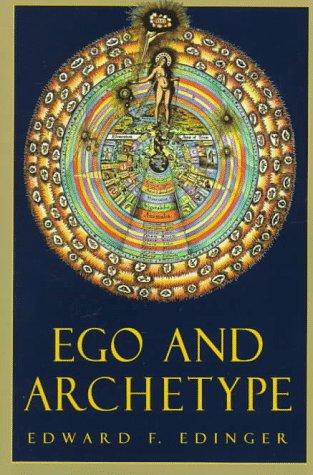
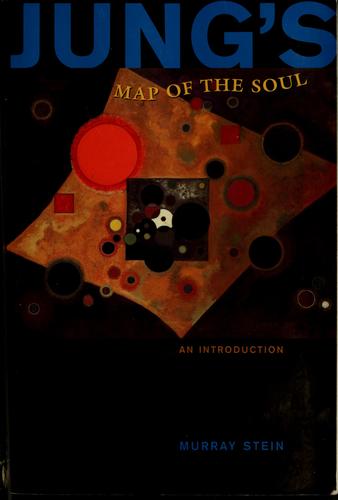
Murray Stein opens Jung’s Map of the Soul with what appears to be a modest aim — to present Jung’s psychological theory to newcomers — but the book’s actual accomplishment is more radical. Stein’s thesis, stated plainly, is that “while gaps and inconsistencies do exist in Jung’s map, there is a more profound underlying unity of vision that far outweighs the occasional lapses from logical precision.” This is not a pedagogical convenience but an interpretive argument. Earlier introductions by Jacobi and Fordham presented Jung’s ideas as discrete modules: ego here, shadow there, anima over there. Stein breaks from this tradition by insisting on what he calls “the overarching coherence within the theory and its subtle network of interconnections.” The book functions less as a map of concepts and more as a demonstration that the concepts form a single organism. This matters because the primary objection to Jung among academic psychologists and even sympathetic clinicians has always been that his system is a “well-stocked zoo” — colorful but lacking rationale. Stein’s entire book is an answer to that charge. Where Edward Edinger’s Ego and Archetype traces one structural relationship (the ego-Self axis) as a developmental line, and where Jolande Jacobi’s The Psychology of C.G. Jung catalogs concepts encyclopedically, Stein alone argues that the unity itself is the point — and that this unity derives not from logical tidiness but from Jung’s nature as a visionary in the lineage of Eckhart, Boehme, and Blake, whose “direct experience of the soul is the ultimate source of Jung’s theory.”
The Archetype-Instinct Nexus Is the Load-Bearing Wall of the Entire System
Stein’s chapter on archetypes and the collective unconscious reveals what most introductory treatments obscure: that for Jung, archetype and instinct are “profoundly related” and that “mind and body are so interrelated that they are nearly inseparable.” Stein warns explicitly that “if this is ignored, the discussion of archetypal images easily slips into an overly spiritualized and groundless psychology.” This is a targeted correction — not merely of popular misconceptions but of tendencies within the Jungian tradition itself. James Hillman’s archetypal psychology, for instance, deliberately unmoored the archetype from biological substrate, treating images as autonomous realities. Stein, channeling late Jung (particularly “On the Nature of the Psyche,” which he calls Jung’s “most comprehensive and synthetic theoretical work”), pulls the archetype back into the body. The spectrum model — with instinct at one pole and spirit at the other, connected by a continuum of psychoid processes — is presented not as one idea among many but as the theoretical bedrock without which the rest of Jung’s edifice is merely decorative. This is what makes Jung Platonic but not merely Platonic: “the difference between Jung and Plato is that Jung studied the Ideas as psychological factors and not as eternal forms or abstractions.” The archetype is always also an instinct. Stein’s insistence on this point aligns him with Anthony Stevens’s biosocial reading of archetypes in Archetype Revisited and distances him from purely imaginal readings.
Synchronicity Completes the Theory of the Self Rather Than Departing from It
The book’s final chapters perform an interpretive coup that most introductions to Jung avoid entirely. Stein demonstrates that “the theory of archetypes and the self and the theory of synchronicity were combined to weave a single fabric of thought.” Synchronicity is not, in Stein’s reading, a speculative appendix Jung added in old age; it is the necessary consequence of taking the self’s transcendence seriously. If the self is psychoid — extending beyond the boundary of psyche into the nonpsychic world — then events of meaningful coincidence between inner state and outer event are not anomalies but expected features of the system. Stein traces this line from Einstein’s influence on Jung’s thinking about the relativity of time, through the collaboration with Pauli, to the final published essay. The implication is stark: “to grasp the full scope of the theory of the self, one must consider it within the context of Jung’s thinking on synchronicity; to grasp his theory of synchronicity one must also know about his theory of archetypes.” Few other commentators have stated this reciprocal dependence so clearly. The result is that Stein’s “map of a map” makes visible a conceptual architecture that is invisible when Jung’s works are read piecemeal — which is how most people encounter them.
The Transformation of Libido, Not Its Sublimation, Defines Jung’s Break with Freud
Stein’s treatment of psychic energy zeroes in on the precise conceptual fault line between Jung and Freud: transformation versus sublimation. For Freud, cultural achievement is always a substitute for instinctual satisfaction; for Jung, culture is “a fulfillment of desire, not an obstruction of it.” Symbols do not redirect libido away from its true objects; they are the objects toward which libido naturally flows when the psyche is permitted its full range. This distinction, which Stein presents with considerable clarity, has implications that radiate through the entire system. It explains why Jung could view sacrifice as voluntary rather than coerced (contra the castration-threat model), why individuation is a natural process rather than a therapeutic imposition, and why the symbol holds such central importance — it transforms energy, it does not merely disguise it. Stein’s account here complements and sharpens what Donald Kalsched explores in The Inner World of Trauma, where the failure of symbolic transformation produces the self-care system’s defensive splitting. Where Kalsched shows what happens when transformation fails, Stein shows the theoretical architecture of how transformation is supposed to work.
Why This Book Still Matters
For anyone entering depth psychology today, Stein’s Jung’s Map of the Soul provides something no other single volume does: a demonstration that Jung’s theory is one theory, not a collection of fascinating but disconnected speculations. It is the only introductory text that treats synchronicity, the archetype-instinct spectrum, and the self as parts of a unified vision rather than separate topics in a syllabus. The book does not replace reading Jung — Stein is explicit that “the map is not the territory” — but it reveals the connective tissue that makes the Collected Works cohere. For clinicians who have absorbed Jungian concepts piecemeal through training seminars, and for scholars who have encountered Jung primarily through his critics, Stein’s book is the corrective lens that brings the whole picture into focus.
Sources Cited
- Stein, M. (1998). Jung's Map of the Soul: An Introduction. Open Court. ISBN 978-0-8126-9376-5.
- Jung, C.G. (1921). Psychological Types. Collected Works, Vol. 6. Princeton University Press.
- Jung, C.G. (1951). Aion: Researches into the Phenomenology of the Self. Collected Works, Vol. 9ii. Princeton University Press.
- Edinger, E.F. (1972). Ego and Archetype: Individuation and the Religious Function of the Psyche. Shambhala.