 Seba.Health
Key Takeaways
- Stein's central theoretical innovation is the concept of the "self imago" — not the self as metaphysical entity but as an entomological form that emerges from developmental latency, making individuation a biological analogy rather than a spiritual aspiration.
- The book reframes midlife crisis as pupation rather than pathology, positioning the dissolution of identity not as breakdown but as the necessary liquefaction that precedes adult form — a move that directly challenges Freud's freezing of character development at the oedipal stage.
- By reading Rilke, Picasso, and Jung as parallel cases of the same transformational archetype, Stein demonstrates that the "transformative image" operates identically whether it arrives as a line of poetry in the wind, a Minotaur on canvas, or a stone tower at Bollingen — collapsing the distinction between artistic and psychological process.
The Self Imago Is an Entomological Concept Disguised as a Psychological One
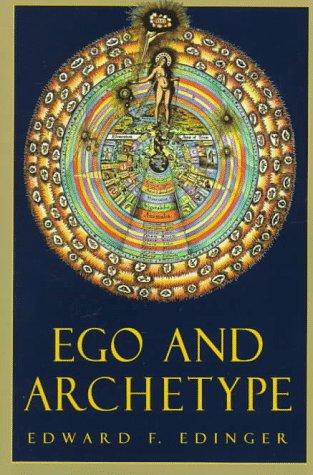
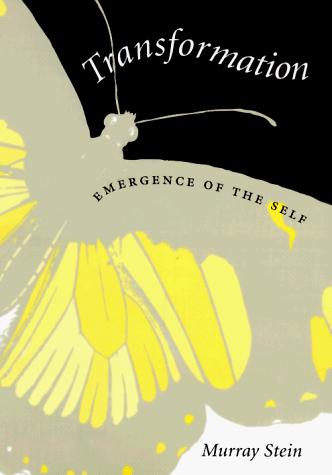
Murray Stein’s Transformation: Emergence of the Self builds its entire theoretical architecture on a single governing metaphor — the metamorphosis of caterpillar into butterfly — and pushes that metaphor further than any Jungian author before or since. The term “imago” is not casually borrowed. In entomology, it names the final, sexually mature form of an insect after metamorphosis. Stein appropriates this with full precision: the self imago is the adult psychic form that has been latent since birth, encoded in what he calls “imaginal disks” — structures resident in the psyche from the beginning, awaiting the hormonal shift that triggers their activation. This is not self-improvement or spiritual aspiration. It is, as Stein insists, “realization, revelation, and emergence, not self-improvement, change for the better, or becoming a more ideal person.” The self is not chosen; one is chosen by it. Where Edinger’s Ego and Archetype maps the ego-Self axis as a structural relationship discoverable in analysis, Stein’s contribution is temporal and processual: the self imago is something that hatches at a particular developmental moment, and the conditions for that hatching involve the total dissolution of prior psychic structure. The dream that opens the book — a woman wrapped in Egyptian linen, hung upside down, her bones dissolving into liquid while snakes trace figure eights through the cocoon — is not illustrative decoration. It is the book’s thesis in imaginal form: identity must liquefy before it can reorganize.
Pupation Is Not Pathology: Stein’s Challenge to Both Freudian Reductionism and Jungian Idealism
Stein positions his developmental model against two opponents. The first is Freud, who “would have frozen major character development at the end of the oedipal stage” and considered the rest of life as repetition. The second, less obviously, is the optimistic wing of humanistic and even Jungian psychology that treats individuation as a kind of spiritual achievement program. Stein is pointed: “I do not mean to imply that we can become whatever we want to be, our ideal self. This is a typical illusion of the first half of life.” The self is not an ideal; it is a pattern already laid down, and the post-adolescent phase of life is, he argues, “another type of latency period” analogous to the pre-pubertal latency Freud identified in children. This is a bold claim. It means that the entire period of young adulthood — career-building, relationship formation, social adaptation — is not maturity but a holding pattern. Real identity does not form “in any deeply significant way, until after midlife, typically in a person’s late forties.” This stands in tension with Erikson’s eight-stage epigenetic model, which distributes identity crises across the lifespan, and with Lifton’s “Protean self,” which Stein dismisses as mere multiplicity without transformation. The concept of liminality — borrowed from van Gennep and Turner but applied here to entire decades of psychic life — gives Stein his diagnostic frame: the person in midlife crisis is not sick but liminal, suspended between dissolved structure and emergent form.
The Transformative Image Operates Identically Across Art, Analysis, and Religious Experience
Chapter Two introduces the mechanism by which transformation actually occurs: the “transformative image.” This is Stein’s version of what Jung called the symbol, but Stein narrows and sharpens it. A transformative image is not any symbol; it is a specific encounter — with a person, a dream, a work of art, a voice in the wind — that triggers the hormonal shift (metaphorically speaking) from larval to pupal existence. William Mellon Jr. encounters Albert Schweitzer and abandons his identity as a wealthy heir to become a physician in Haiti. Rilke, studying a legal letter about his divorce while walking outside Duino Castle, hears a line of poetry in a storm and begins the decade-long gestation of the Duino Elegies. Jung, in 1912 — the same year, at the same age as Rilke — breaks from Freud and descends into the visionary material that would become the Red Book. Stein’s insistence on the simultaneity of Rilke’s and Jung’s crises (both aged thirty-seven in 1912) is not biographical trivia. It is structural evidence for his thesis that the transformative image activates a universal developmental program. This parallels James Hillman’s argument in The Soul’s Code that the individual life unfolds an innate pattern — the daimon — but Stein differs from Hillman in critical respects. Where Hillman distrusts developmental thinking and resists stage models, Stein embraces temporal sequence. The caterpillar must pupate; there is an order. And where Hillman’s acorn theory locates calling in childhood, Stein locates the decisive emergence in the second half of life.
Relationship as Alchemical Vessel, Not Therapeutic Tool
Chapter Three moves from the intrapsychic to the interpersonal, arguing that intimate relationships function as alchemical vessels for transformation. Stein draws extensively on Jung’s Psychology of the Transference and the Rosarium Philosophorum woodcuts to demonstrate that the “relational couple” constitutes a shared unconscious — the dream of the enormous basement beneath the house that is “six times as big” as the house itself. This is not object-relations theory in Jungian clothing. Stein’s claim is more radical: the unconscious in a deep relationship is unitary, not shared. The couple does not each bring their own unconscious to the table; they participate in a single psychic field. This echoes Nathan Schwartz-Salant’s work on the interactive field in analysis, but Stein extends it beyond the consulting room into marriage itself. The transformative image can emerge between two people as readily as within a single psyche. The basement dream’s punchline — that the deepest interior opens onto ocean views and terraced gardens — literalizes Jung’s dictum that “the psyche is an open space, and the farther inward you go, the more you find yourself outside.”
What This Book Illuminates That No Other Does
Transformation matters today because it provides the clearest available model for distinguishing genuine psychological transformation from what Stein calls “simple deconstructive nihilism on the one side and Utopian delusion on the other.” In a culture saturated with self-help language about reinvention and personal growth, Stein’s entomological precision is a corrective: you do not choose your imago, and the process of reaching it requires the dissolution of everything you have constructed. The modern mandala, as Jung observed and Stein reiterates, is empty at its center. Picasso’s final self-portrait — a skull-like face staring from the canvas — is for Stein “a defining image for this age.” Against that emptiness, Stein does not offer reassurance. He offers a developmental map: the emptiness is the cocoon, not the destination. For readers who have absorbed Jung’s Aion or Edinger’s The Creation of Consciousness in the abstract, Stein’s book supplies the lived phenomenology of what those theoretical structures actually feel like from the inside — the depression, the liquefaction, the agonizing patience of seasons passing outside the old man’s window.
Sources Cited
- Stein, M. (1998). Transformation: Emergence of the Self. Texas A&M University Press.
- van Gennep, A. (1909). The Rites of Passage. University of Chicago Press.
- Jung, C.G. (1946). The Psychology of the Transference. In Collected Works, Vol. 16. Princeton University Press.