 Seba.Health
Key Takeaways
- Von Franz treats historical dreams not as curiosities but as diagnostic X-rays of civilizational one-sidedness, demonstrating that the compensatory function of the unconscious operates at collective and epochal scales, not merely personal ones.
- The Descartes chapter is the book's hidden center of gravity: it reveals that the entire edifice of Cartesian rationalism was built in defiance of a dream that explicitly warned against the absolutization of the thinking function—making the "cogito" itself an act of disobedience to the psyche.
- By juxtaposing the dreams of mothers of saints with those of philosophers and generals, von Franz establishes that the archetypal pattern behind a life can be glimpsed before birth, through the maternal unconscious, collapsing the boundary between individual and transgenerational psychology.
The Compensatory Dream Operates at Civilizational Scale, Not Merely Personal Scale
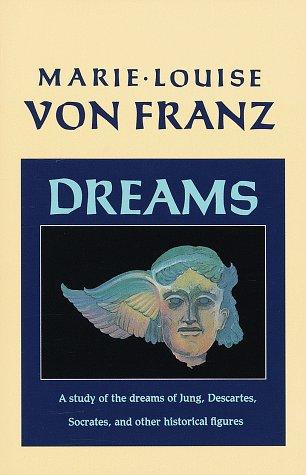
Von Franz’s Dreams appears at first to be a miscellany—essays written across decades, gathered thematically. But read as a unified argument, the book makes a radical claim: that the compensatory function Jung identified in individual dreamwork is equally operative at the level of entire civilizations, and that the dreams of historically consequential figures are precisely the sites where this collective compensation becomes legible. The opening chapters lay the theoretical groundwork by distinguishing Jung’s position from Freud’s: where Freud saw dreams as concealed wish-fulfillments requiring a censor, Jung understood the dream’s apparent obscurity as a structural feature of the threshold between consciousness and the unconscious—“candlelight which fades as soon as one switches on the electric light of ego-consciousness.” This is not metaphor but epistemology. It means the dream is not unclear because something is hidden but because consciousness itself has an obliterating effect on the material it contacts. Von Franz insists that dreams point to “complex data not yet grasped by our ego-consciousness,” invoking the transcendent function—the symbol-forming spirit that opens pathways for psychic growth. This principle, when applied to the dreams of Socrates, Descartes, and the mothers of saints, transforms the book from case-study collection into cultural diagnosis.
Descartes’s Dream Exposes Rationalism as a Symptom, Not an Achievement
The Descartes chapter is the book’s intellectual summit. Von Franz reconstructs the three dreams of November 10, 1619, and demonstrates that they contain, “in a nutshell, the actual problem of the man of our time.” The melon—a round fruit, symbol of the Self—appears as a unity, while the later dreams fracture into sparks and individual portraits, signaling the dissociation that follows when the ego claims sovereignty over psychic life. The unknown stranger who recommends the poem “Est et Non” is, von Franz argues, a trickster figure attempting to undermine Descartes’s growing absolutization of thinking. The stranger wants to make clear that “all his sudden ideas and inspirations, his thinking and feeling, which he firmly believes to be under his control … are in reality entirely dependent on the good grace of the unconscious.” Descartes’s mother died when he was an infant; von Franz links this biographical wound directly to his “hopelessly skeptical, timid, lifeless expression” and his evacuation of feeling as a psychic function. The cogito ergo sum is thus reframed not as a philosophical breakthrough but as a defense—what Edinger, in Ego and Archetype, would recognize as an inflation of the ego-consciousness that mistakes itself for the totality of the psyche. Von Franz’s conclusion is devastating: “My criticism is directed against Cartesian rationalism, which still influences man today.” The dream itself showed the danger; Descartes extracted “only a partial insight.” The pilgrimage to the Madonna of Loretto that followed was an instinctive but inadequate compensatory gesture toward the feeling function he had already abandoned.
Maternal Dreams Reveal the Archetypal Blueprint Before the Ego Exists
The chapters on Monica (mother of Saint Augustine) and the mothers of Bernard of Clairvaux and Saint Dominic constitute a genuinely original contribution to depth psychology. Von Franz analyzes these women’s prenatal or early-childhood dreams about their sons and discovers archetypal patterns—the white dog, the transformation of color from black through white to red—that correspond to the alchemical stages of nigredo, albedo, and rubedo. The mother of Bernard dreams of bearing a dog; von Franz reads this not as personal neurosis but as an image of the instinctual energy the mother has been forced to suppress, which then constellates the son’s destiny. “When a mother suppresses her instinctual life, then the son will probably live it out to an excessive extent. But he can only do this if he manages to break away.” Bernard and Dominic did not break away; they lived the pattern of the mother complex “in a high and admirable form,” sacrificing personal life but projecting the dark onto enemies. This is precisely the dynamic Neumann analyzed in The Origins and History of Consciousness: the hero who fails to separate from the maternal unconscious does not individuate but instead channels archetypal energy into collective religious form. Von Franz adds a dimension Neumann does not: the dream of the mother is itself the blueprint, visible before the son’s ego has even formed. This collapses the usual temporal framework of Jungian analysis, where one excavates backward to childhood. Here the unconscious is already narrating forward through the maternal psyche.
Socrates’ Anima Appears at the Threshold of Death as Evidence of Unlived Life
The Socrates chapter turns on the dream in the Crito: a beautiful woman in white garments approaches and speaks a line from Homer. Von Franz identifies her as the anima—the soul-image—appearing in a form that surprises, given Socrates’ lifelong attachment to youths rather than women. But the white noble form recalls Diotima, the wise woman of the Symposium, and von Franz argues that Socrates’ anima developed exclusively on the spiritual plane, never touching instinct. The recurring dream command—“Make music and work”—was, she insists, a compensatory demand from the unconscious that Socrates develop his feeling function. He misunderstood it as encouragement for philosophy, “the highest mousiké.” Only before death, plagued by doubt, did he resort to the “inadequate, primitive expedient of carrying out the command literally” by versifying Aesop. This reading is consonant with Hillman’s later argument in The Dream and the Underworld that dreams belong to the imaginal realm and resist literalization—but von Franz arrives at a different conclusion. For her, the dream is not merely imaginal but purposive: it wants something from consciousness. Socrates’ failure to understand the dream is a genuine psychological tragedy, not a hermeneutic inevitability.
This book matters because it does something no other work in the Jungian canon attempts with comparable philological rigor: it uses historical dreams as empirical evidence for the reality of the collective unconscious and its compensatory intelligence. Where Jung’s Memories, Dreams, Reflections offers autobiography, and Edinger’s commentaries offer amplification of symbols, von Franz performs something closer to cultural psychodiagnosis—reading the dreams of civilizational turning points as if they were clinical material. The Descartes chapter alone constitutes one of the strongest arguments ever made that the modern dissociation of intellect from feeling was visible to the unconscious before it became the dominant episteme. For anyone studying the relationship between individual psychopathology and collective cultural drift, this book is irreplaceable evidence.
Sources Cited
- Von Franz, M.-L. (1998). Dreams: A Study of the Dreams of Jung, Descartes, Socrates, and Other Historical Figures. Shambhala Publications.
- Jung, C.G. (1964). Memories, Dreams, Reflections. Edited by A. Jaffé. Vintage Books.
- Jung, C.G. (1964). Man and His Symbols. Doubleday.