 Seba.Health
Key Takeaways
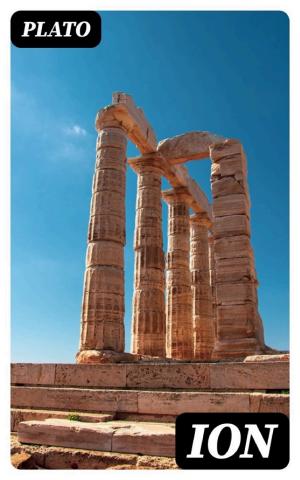
- The *Ion* is not primarily about poetry or literary criticism but is Plato's first systematic assault on the autonomous authority of the image—the opening move in a campaign that Hillman's entire archetypal psychology exists to reverse.
- Socrates' doctrine of divine possession in the *Ion* contains a fatal double bind: it grants the poet numinous status while simultaneously stripping him of epistemic legitimacy, inaugurating the Western split between inspiration and knowledge that depth psychology inherits as the dissociation between affect and cognition.
- Ion himself is the clinical portrait of a man identified with an archetypal content—he is inflated by Homer yet possesses no self-reflective relationship to the force moving through him, making the dialogue a pre-Jungian case study in possession by the complex.
Plato’s Ion Is the Origin Document of the War Between Logos and Imagination That Depth Psychology Exists to Adjudicate
The Ion is routinely dismissed as a minor dialogue, a warmup exercise before the Republic’s full-scale banishment of the poets. This reading is catastrophically shallow. What Plato accomplishes in these few pages is nothing less than the foundational severance of inspiration from intelligence—the philosophical act that creates the conditions for what Hillman, across Re-Visioning Psychology and The Myth of Analysis, identifies as the Western psyche’s systematic devaluation of the imaginal. When Socrates demonstrates that Ion cannot give a rational account (technē) of what he does when he recites Homer, the conclusion drawn is not that rational accounting is inadequate to the phenomenon, but that the phenomenon is epistemically empty. The image, the performance, the felt transport—all are real, Socrates concedes, but they produce no knowledge. This is the precise moment when Western culture begins to treat the products of imagination as epistemically inferior to the products of dialectic. Hillman’s entire project of restoring “the poetic basis of mind” is a 2,400-year-delayed rebuttal to the argument Socrates wins in this dialogue. The Ion is the crime scene; archetypal psychology is the forensic investigation.
The Allegory of the Magnetic Chain Is a Theory of Archetypal Possession Disguised as Aesthetic Metaphor
Socrates’ image of the magnetic stone—the Muse magnetizes the poet, who magnetizes the rhapsode, who magnetizes the audience—is typically read as a charming analogy for artistic inspiration. Read psychologically, it describes something far more precise: the transmission of archetypal energy through a chain of identified egos. The Muse is the archetype; the poet is the first carrier of the complex; Ion is the secondary carrier, possessed at one remove. Ion weeps when he recites Achilles’ grief, rages when he performs battle scenes—and cannot account for why. He is, in Jungian terms, completely identified with the archetypal content flowing through him. He has no ego-complex differentiation. This is exactly the condition that Edinger, in The Psyche in Antiquity, describes when he traces the precursors of the archetype concept back through Platonic eidos: the Form acts upon the soul, and the soul that cannot distinguish itself from the Form is possessed. Ion’s failure is not that he is inspired—it is that he has no reflective relationship to his inspiration. He cannot say “who” is speaking through him, which is precisely the question Hillman identifies as the eternal discriminating act of polytheistic consciousness: the “Who?” that “is answered never by one single archetype or one God, but always by this one in its particular constellation with others.” Ion cannot perform this discrimination. He is a monolith of Homeric identification, and Socrates exploits this to discredit the entire mode of knowing that Ion represents.
Socrates’ Victory Is Pyrrhic: What He Expels Returns as the Errant Cause
The deepest irony of the Ion is that Socrates succeeds in banishing imaginal knowledge from the domain of technē only to have it return, in his own later work, as the ungovernable principle of Necessity (Ananke). In the Timaeus, as Hillman exhaustively demonstrates, Plato acknowledges two archai: Nous and Ananke, Reason and the Errant Cause. The errant cause is “rambling, digressing, straying, irrational, irresponsible”—exactly the qualities Socrates attributes to Ion’s mode of consciousness. What Plato expels through the front door of the Ion he readmits through the back door of the Timaeus, now under the name of cosmic Necessity. Hillman reads this errant principle as the archetype of pathologizing itself: “the psyche’s autonomous ability to create illness, morbidity, disorder, abnormality, and suffering.” The possessed rhapsode and the errant cause are the same psychological phenomenon viewed from different stages of Plato’s career. The Ion tries to quarantine it; the Timaeus concedes it can never be fully persuaded by reason. Peterson’s work on the Homeric thūmos deepens this point: what Socrates dismisses in Ion is the same thoracic intelligence—the seat of paschō and tlaō, intake and endurance—that Plato will later demote from sovereign partner to “spirited guard dog” in the Republic. The Ion is the first act of that demotion.
Why the Ion Remains the Indispensable Starting Point for Any Psychology of the Image
For anyone working within depth psychology today, the Ion matters because it names, with surgical clarity, the exact prejudice that therapeutic culture has inherited and still cannot shake: the belief that if you cannot give a rational account of a psychic experience, the experience has no cognitive value. Every clinician who privileges interpretation over image, every theorist who translates dream into concept, every system that reduces symbol to sign, is performing the Socratic move that the Ion inaugurates. Murray Stein’s observation that “what Jung created in his theory of the psyche was a psychologically based version of Plato’s philosophical vision” is precisely half-right: Jung recuperated the Platonic Forms as archetypes, but his deeper achievement was recuperating what Plato expelled—the autonomous, errant, magnetically transmitted power of the image that Ion embodies and cannot explain. To read the Ion with psychological eyes is to witness the birth of a wound that the entire tradition of Hillman, Corbin, and Neoplatonic imaginal psychology labors to heal. No other text in the Western canon marks the exact moment when soul was told its own experience does not count as knowledge.
Sources Cited
- Plato. Ion. Trans. Paul Woodruff (1983). Hackett.
- Murray, P. (1996). Plato on Poetry. Cambridge University Press.
- Dodds, E. R. (1951). The Greeks and the Irrational. University of California Press.